
Let’s start with this:
If you tell people they can eat unlimited shrimp, they will take that as a personal challenge.
That is exactly what happened to Red Lobster in 2024.
The company filed for Chapter 11 bankruptcy, and one of the most talked-about reasons was its “Ultimate Endless Shrimp” promotion, which reportedly cost about $11 million in a single quarter.
Shrimp alone did not sink the business. But it did shine a very bright spotlight on deeper issues.
For entrepreneurs, this story is full of valuable lessons, and a few laughs if we are being honest.
Let’s break it down.
When a Great Idea Gets Too Popular
Endless Shrimp was not new. It had been a seasonal promotion for years, something designed to bring people in during slower periods.
Then came the big decision:
Make it permanent.
Keep the price low.
At first glance, it sounds like a win: more customers, more buzz, packed restaurants.
But here is what they did not fully account for.
People love a good deal, and they really love getting their money’s worth.
So customers kept ordering. Plate after plate.
What looked like a smart marketing move quickly became a very expensive one.
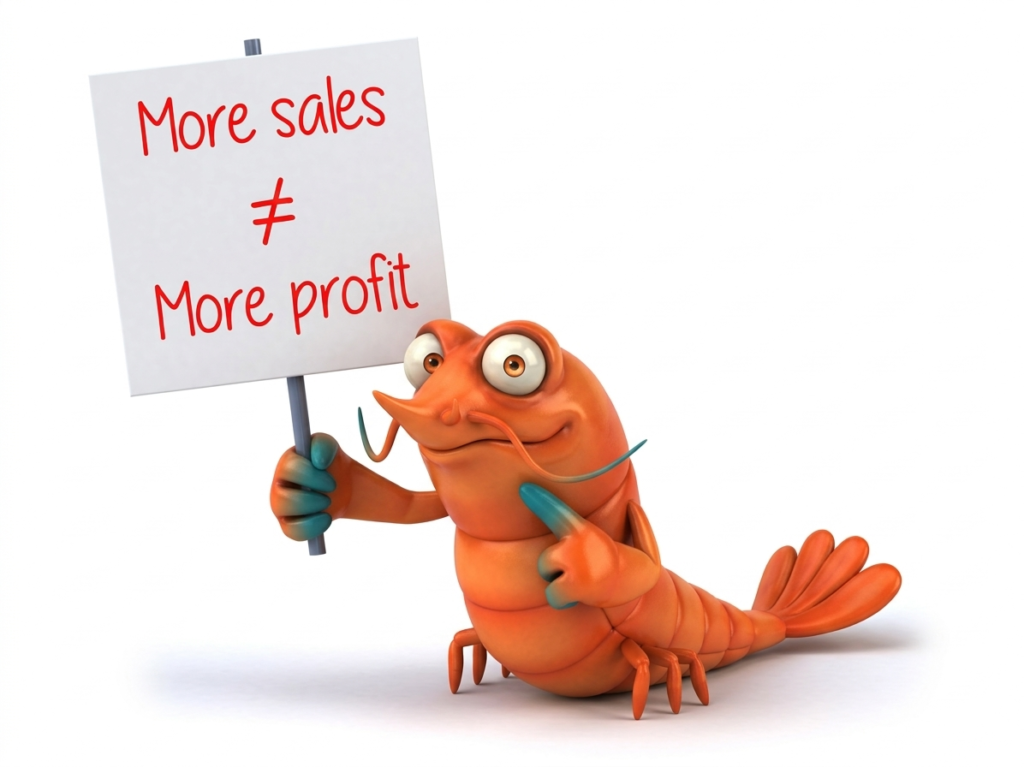
Lesson 1: More Sales Does Not Always Mean More Profit
This is one of the most important lessons for any business owner.
Red Lobster was busy. Tables were full. The promotion worked.
But behind the scenes, margins were getting crushed.
Every extra plate of shrimp meant more cost.
The takeaway is simple. Growth only helps if your numbers actually work.
Before you scale anything, whether it is an offer, a campaign, or a service, ask yourself:
Does this make money consistently?
What happens if demand doubles or triples?
If your business struggles when things go well, that is a problem worth solving early.
Lesson 2: Test First, Then Scale
Promotions are meant to be experiments.
They help you test pricing, demand, and customer behavior. They are not meant to become permanent without adjustment.
Red Lobster skipped a key step. They took something that worked temporarily and made it permanent without fully stress testing it.
For entrepreneurs, the approach should be different.
Run offers in phases.
Measure profitability, not just popularity.
Adjust before you scale.
Just because people love something does not mean it is sustainable.
Lesson 3: Your Customers Will Surprise You
Here is a simple truth.
Customers do not think like business owners.
They are not calculating your margins or worrying about your costs. They are thinking about value.
Unlimited shrimp sounds like an opportunity, and people acted accordingly.
The real lesson is to design your offers based on real behavior, not ideal behavior.
Ask yourself:
What happens if someone uses this to the maximum?
Can my business handle that?
Will my best customers still be profitable?
If the answer makes you uncomfortable, it is worth rethinking the structure of your offer.
Lesson 4: Big Problems Are Usually Layered
While the shrimp story gets the attention, Red Lobster was already dealing with challenges such as rising food and labor costs, declining traffic, and expensive leases.
The promotion did not create all the problems. It exposed them.
That is an important distinction.
When something breaks your business, it often reveals a deeper issue.
Instead of only fixing the surface problem, ask what system allowed it to happen.
That is where the real opportunity lies.
Lesson 5: Not All Marketing Is Good Marketing
“Endless Shrimp” is a great headline. It is simple, memorable, and easy to share.
But attention alone is not the goal.
The wrong kind of attention can attract price-sensitive customers, encourage overuse, and create expectations that are hard to sustain.
A better question to ask is this:
Are we attracting the right customers, at the right price, for the right reasons?
Marketing should support your business model, not work against it.
Lesson 6: Sometimes You Need a Reset
After filing for bankruptcy, Red Lobster began restructuring. They closed locations, adjusted strategy, and brought in new leadership.
There is an important lesson here.
Sometimes, improvement is not about small tweaks. It requires stepping back and rethinking the entire approach.
For business owners, that might mean bringing in outside expertise, upgrading your strategy, or changing how decisions are made.
It is not always easy, but it is often necessary.
The Plot Twist
After everything, they are bringing shrimp back.
Just not in the same way.
The idea itself was not the problem. The execution was.
That is a useful reminder.
A good idea still needs a strong structure behind it.
Final Thought: Build a Business That Works With You
This story is not really about shrimp.
It is about alignment.
Your offers, pricing, and marketing should work together so that when customers win, you win. When demand grows, profit grows. When you scale, things become more efficient.
If your business feels strained when things are going well, that is a signal to pause and adjust.
One Last Thought
Somewhere out there, someone is still talking about how many plates of shrimp they ate that night.
They have no idea they became part of a business lesson.
And honestly, it is impressive.
But as entrepreneurs, the goal is different.
We are not just here to create offers people love.
We are here to build businesses that last.
Preferably ones that do not lose $11 million over seafood.